A Certificate of Analysis is only as trustworthy as the chain behind it. PDFs are easy to edit, and a genuine report for one lot is easy to reuse for another. These are the warning signs, and the one check that settles it.
Key takeaways
- The strongest check is verifying the report with the lab that issued it, using contact details you found yourself.
- A real COA is specific: one lot, one sample, one date.
- Missing raw data (chromatograms, expected vs. observed mass) is a warning sign, not proof of fraud.
The 9 red flags
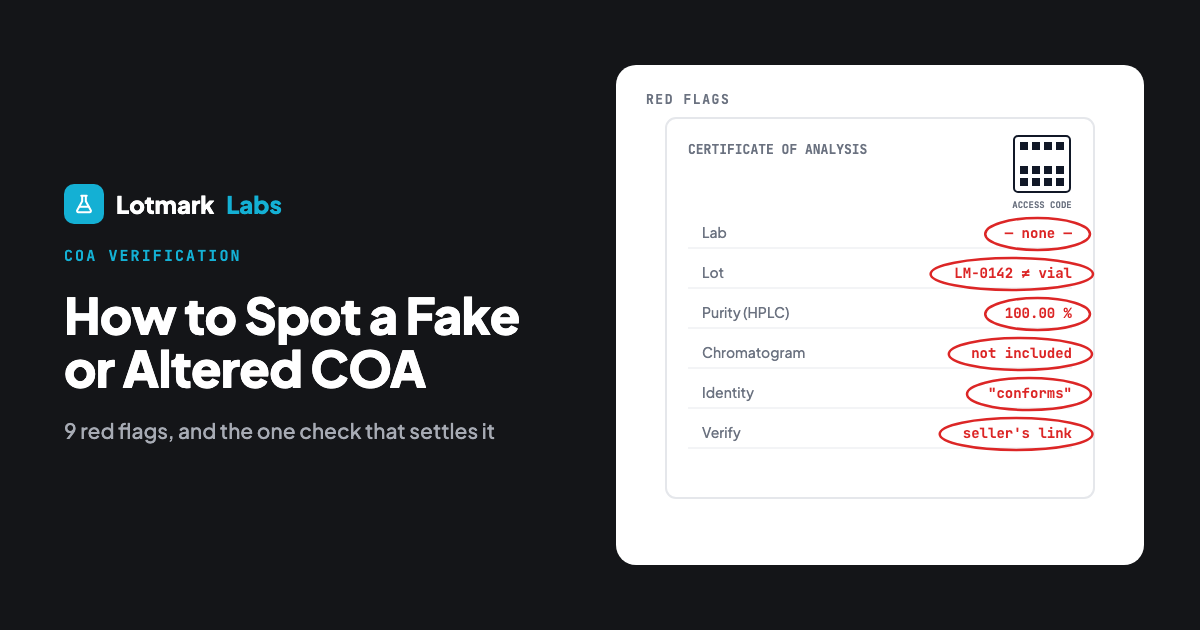
1. The lot number doesn't match your vial
The most common problem, and the simplest to catch. A report for a different lot, however good, says nothing about your material.
2. No lab name, or a lab you can't find
A real report names the lab, its address and a report number. If you cannot find the lab independently, by searching for it rather than trusting the PDF, treat the document as unverified.
3. The same COA appears for different products or lots
Identical numbers, dates or chromatograms across different listings mean a report is being reused.
4. Numbers that are too perfect
"100.00%" purity, a single peak with no peak table, or several lots with identical results to two decimal places. Real data has noise.
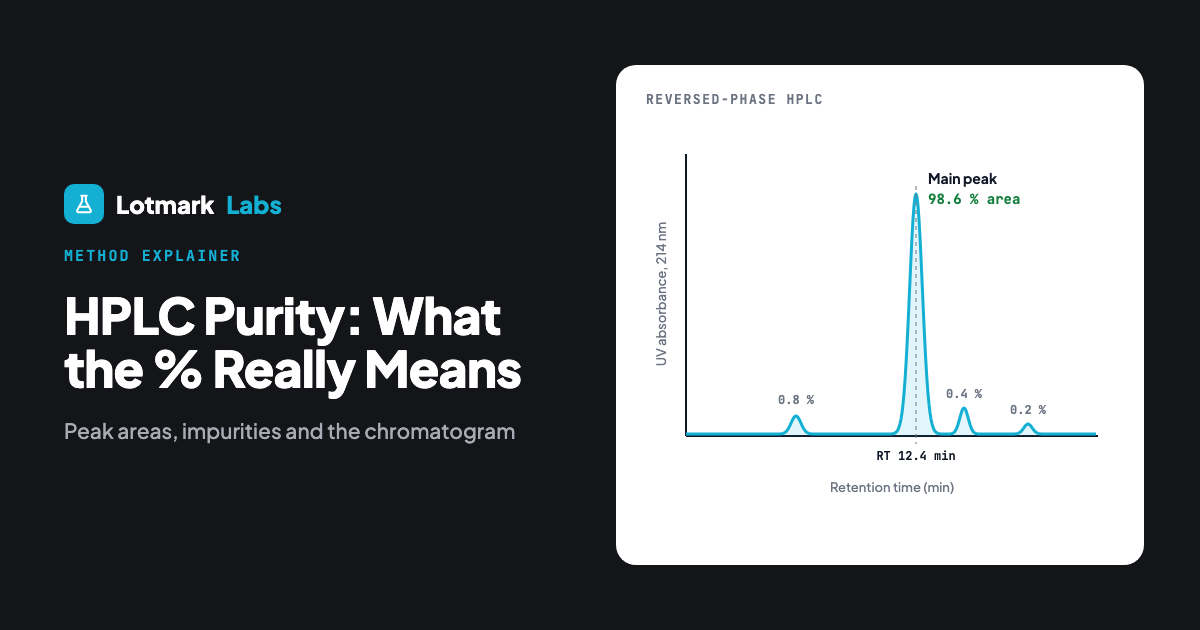
5. A purity number with no chromatogram
Not proof of fraud, but it means the headline figure cannot be checked. Ask for the trace.
6. Identity says "conforms" with no values
A credible identity result shows the expected and observed values, or names the reference standard used.
7. Signs of editing
Mismatched fonts or font sizes, text that sits slightly off the line, blurry areas around numbers, or a document's file properties showing it was created by an editing tool long after the stated test date.
8. Dates that don't add up
A test date before the production date, a report dated after the product went on sale with no earlier report, or a "released" date with no received date.
9. A verification link that doesn't go to the lab
A QR code that opens the seller's website, a cloud folder or nothing at all is not verification. Verification should go to a system the lab runs.
How to verify a COA properly
- Find the lab yourself. Search for its website or accreditation listing. Don't use the phone number or email printed on the COA.
- Ask the lab to confirm the report number, the lot, the test date and the results.
- Use the lab's own verification tool if it has one. Every Lotmark Labs certificate carries an access code: enter it on our verification page to see the record exactly as we released it.
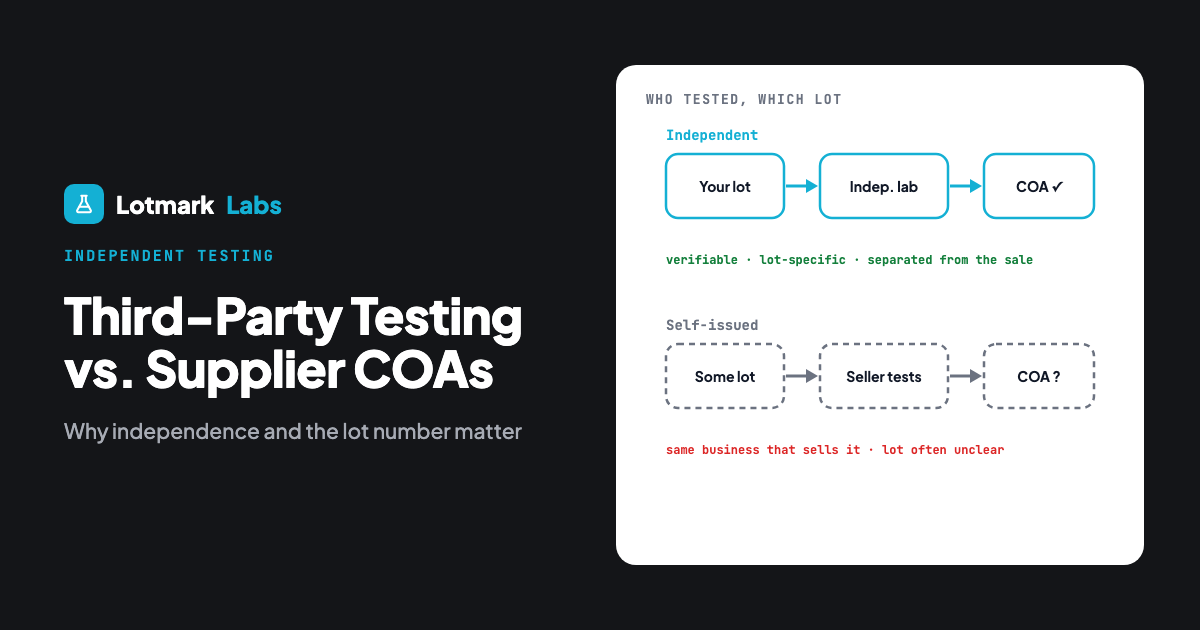
- Re-test if it matters. For important work, send a sample from your own lot to an independent lab.
What a trustworthy COA looks like
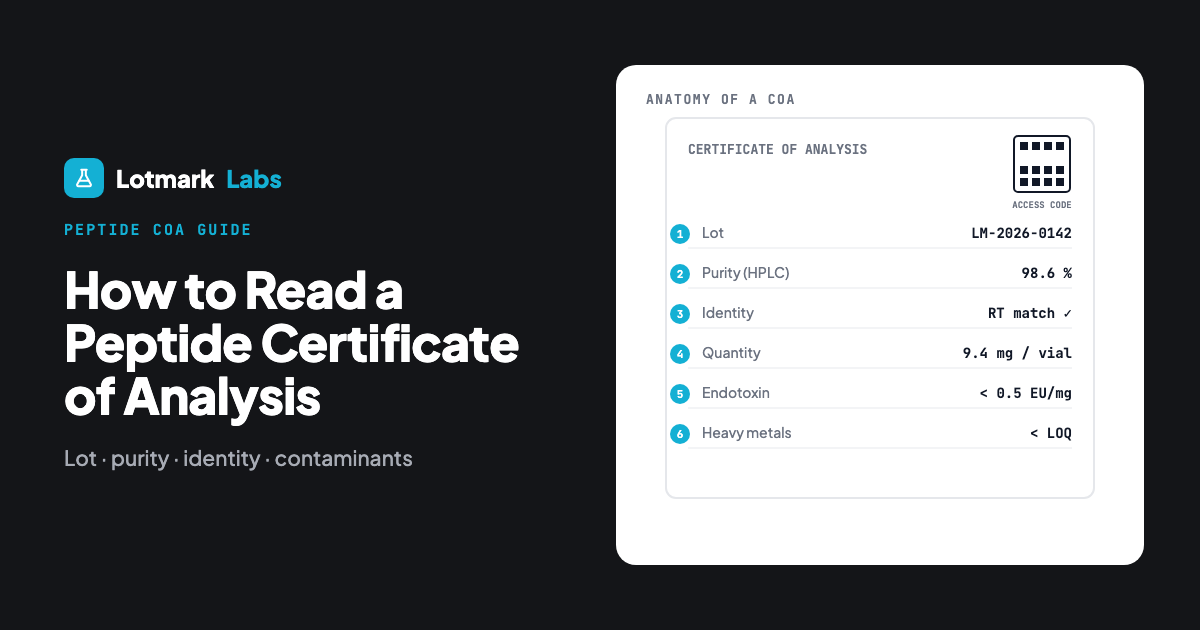
- One lot, clearly matched to the label.
- Named, findable, ideally accredited lab.
- Purity with chromatogram; identity with values; quantity in mg.
- Contaminant tests that match what you need.
- A verification route the lab controls.
Frequently asked questions
Is a COA without a QR code fake? Not necessarily. Many legitimate labs verify by report number instead. What matters is that you can confirm it with the lab.
Can I check a COA from another lab with Lotmark? Our verification page only covers reports we issued. For others, contact the issuing lab, or send us a sample to test independently.
What should I do if a COA turns out to be fake? Stop relying on that material's stated quality, keep the document and correspondence, and test the lot independently before using it.
Lotmark Labs issues a verifiable access code with every certificate. Verify a COA or request independent testing.