Blog
Guides to peptide testing, COAs and lab methods from Lotmark Labs
PEPTIDE TESTING · COAs · LAB METHODS
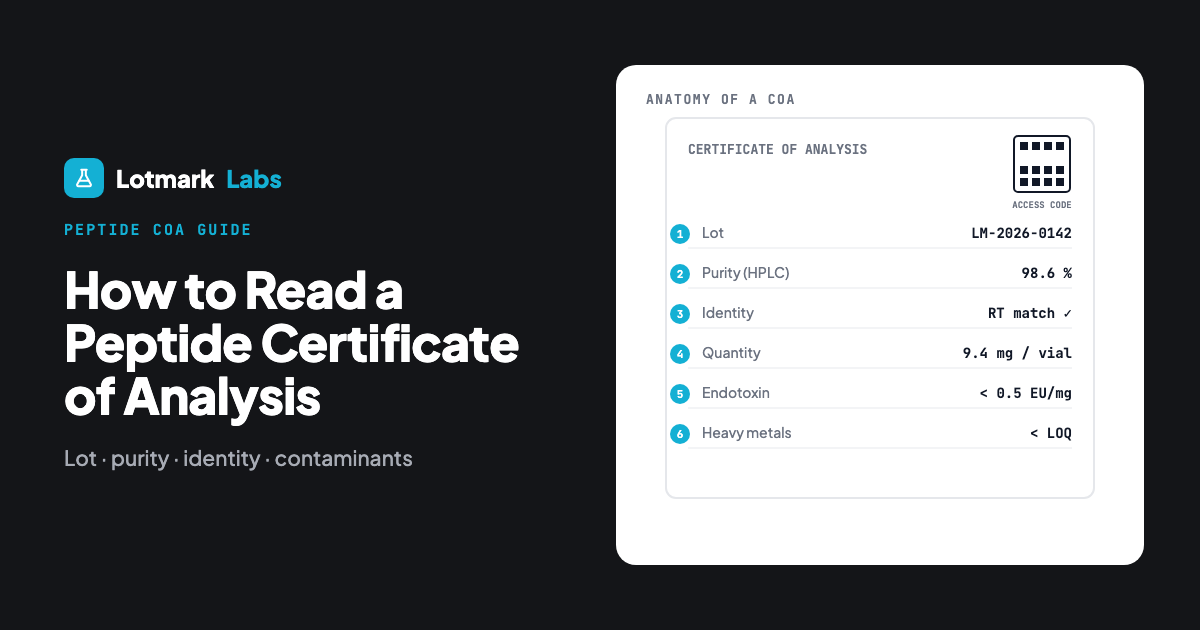
How to Read a Peptide Certificate of Analysis (COA)
A line-by-line guide to a peptide COA: lot number, HPLC purity, identity, quantity, endotoxin and heavy metals, plus the checks that make a report trustworthy.
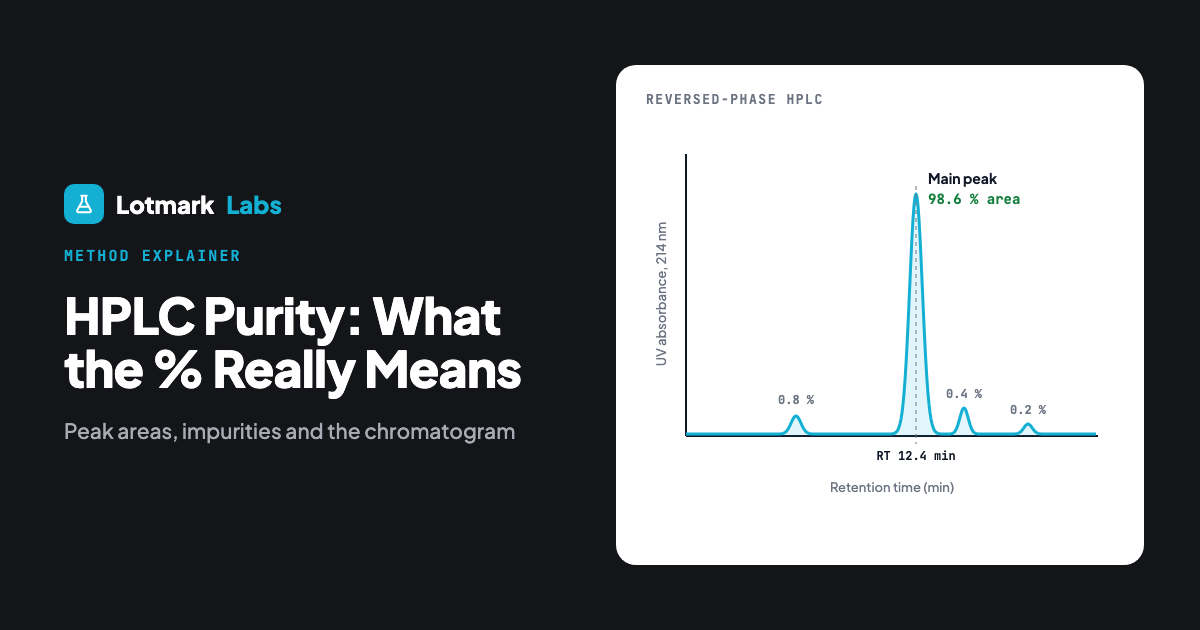
HPLC Purity Testing Explained: What the Percentage Really Means
How reversed-phase HPLC measures peptide purity, what the area % does and doesn't tell you, and how to read a chromatogram on a COA.
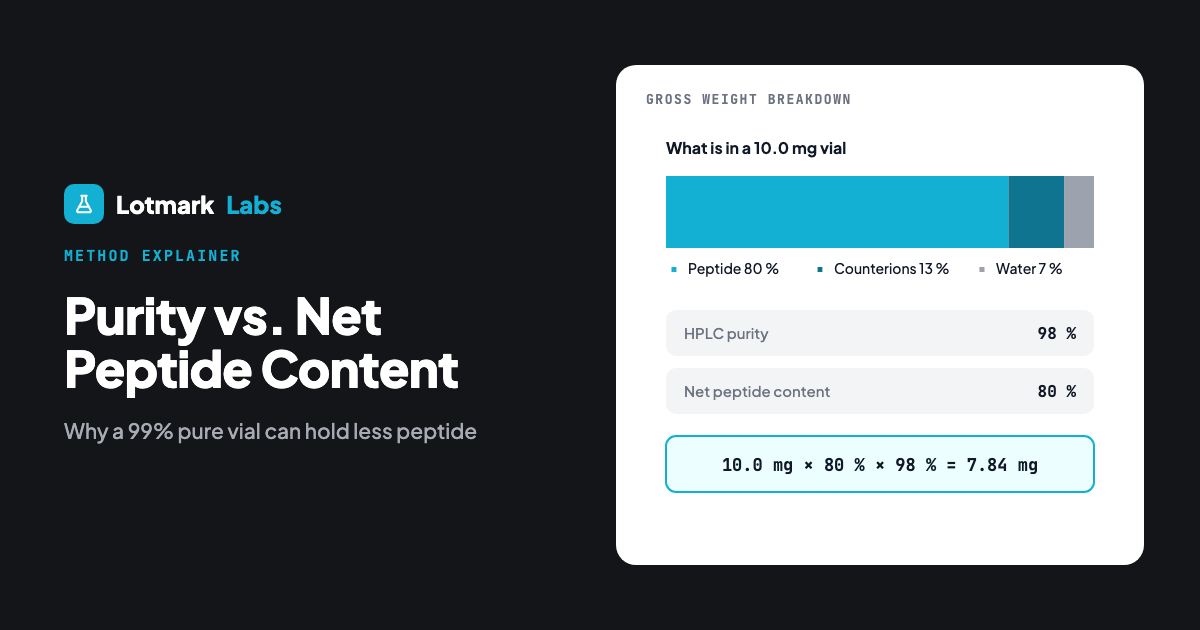
Purity vs. Net Peptide Content: Why a 99% Pure Vial Can Hold Less Peptide
HPLC purity and net peptide content measure different things. Learn how counterions, water and salts change how much peptide is really in a vial, with a worked example.
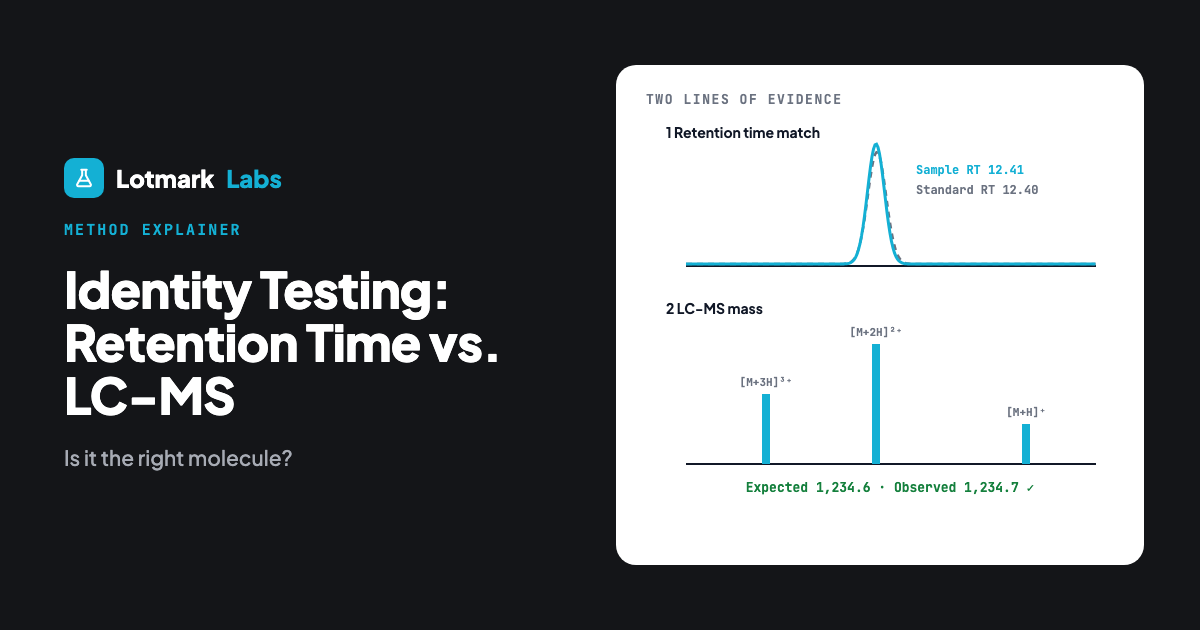
Peptide Identity Testing: HPLC Retention Time vs. LC-MS
Purity doesn't prove a vial holds the right compound. How identity is confirmed by HPLC retention time matching and by LC-MS mass, and the limits of each.
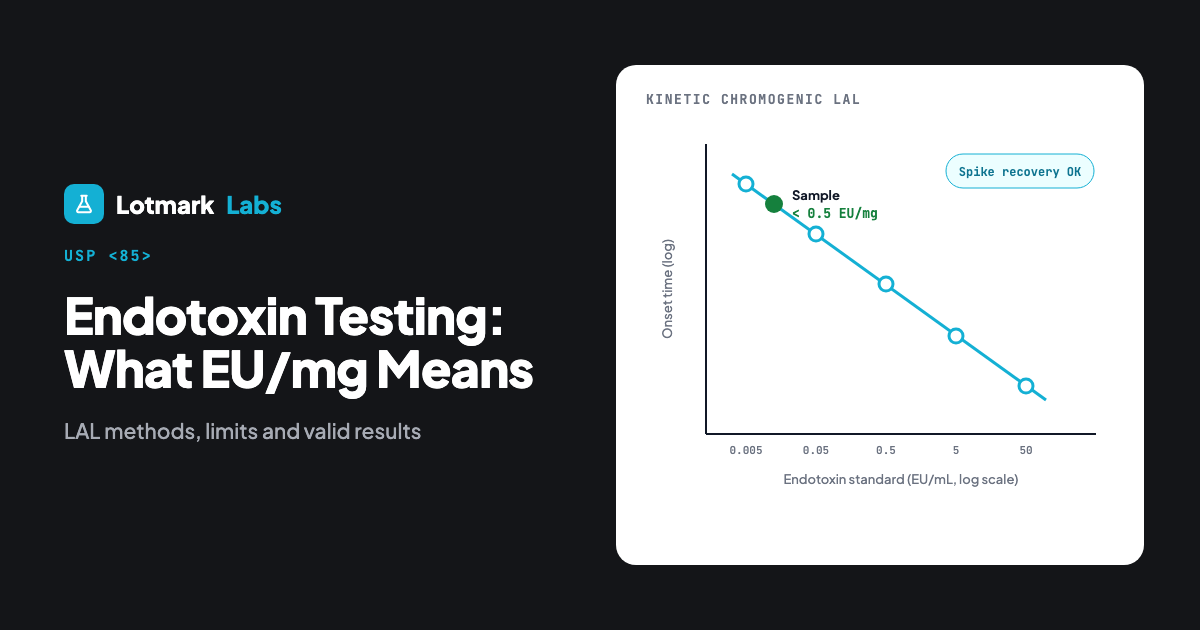
Endotoxin Testing (USP <85>): What EU/mg Results Mean
What bacterial endotoxins are, how the LAL test works under USP <85> (gel-clot, turbidimetric, chromogenic), what EU/mg means, and how limits are set.
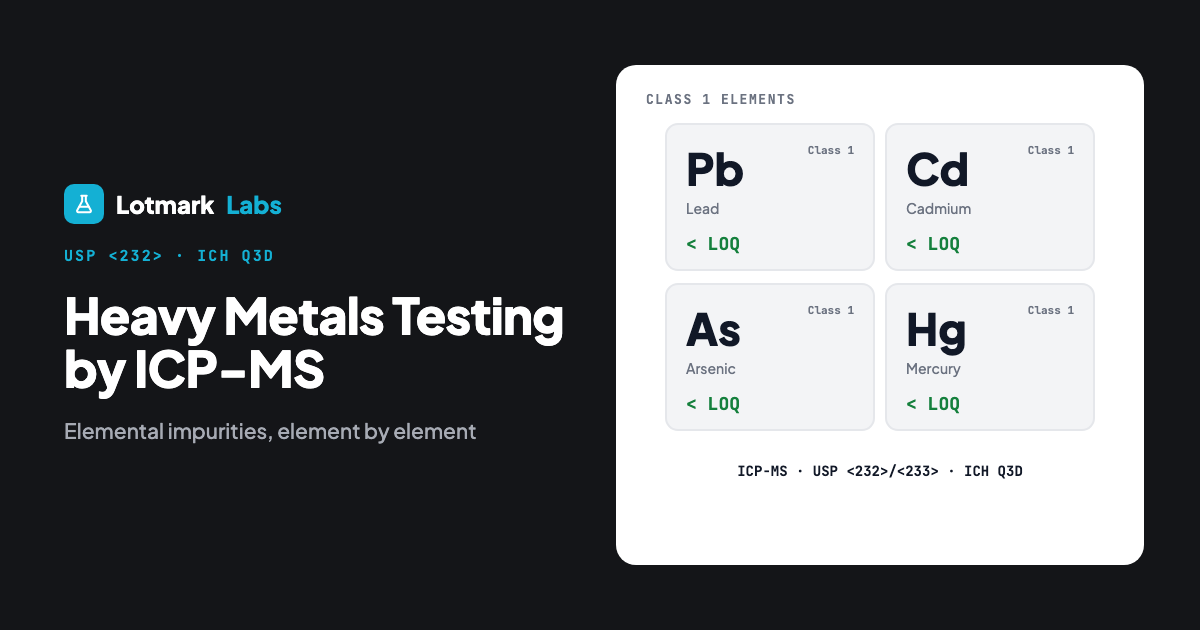
Heavy Metals Testing: ICP-MS, USP <232>/<233> and ICH Q3D
How elemental impurities are tested by ICP-MS, what USP <232>, <233> and ICH Q3D cover, the Class 1 elements, and how to read a heavy metals result on a COA.
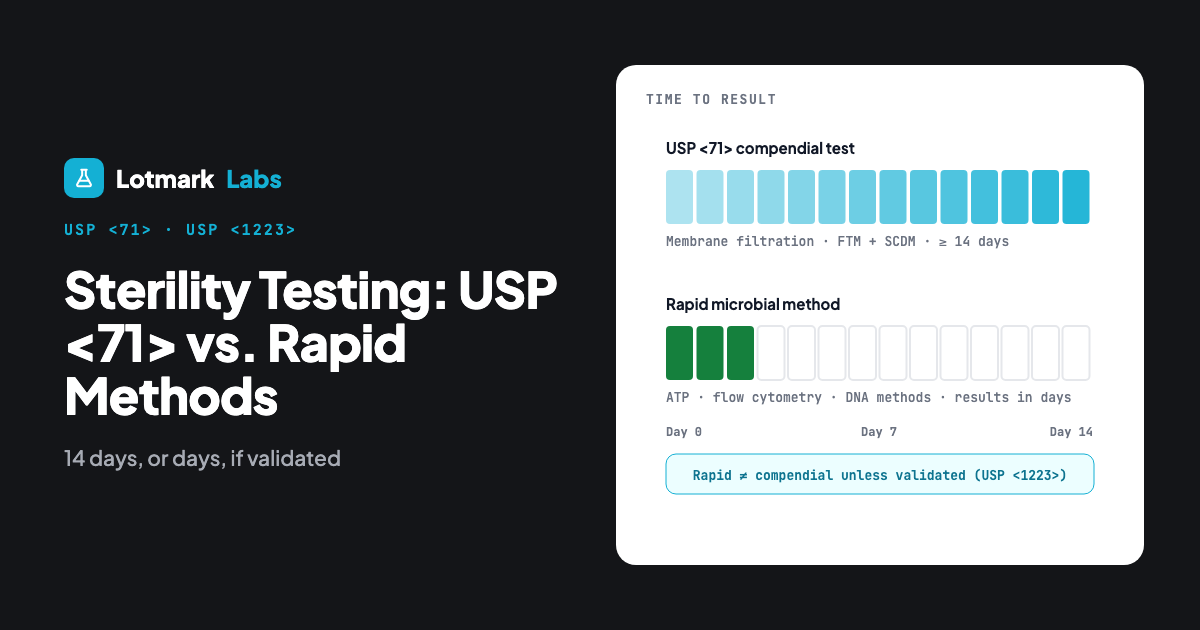
Sterility Testing: USP <71> vs. Rapid Microbial Methods
How the compendial USP <71> sterility test works, why it takes at least 14 days, how rapid methods are validated under USP <1223>, and what a sterility result can and can't prove.
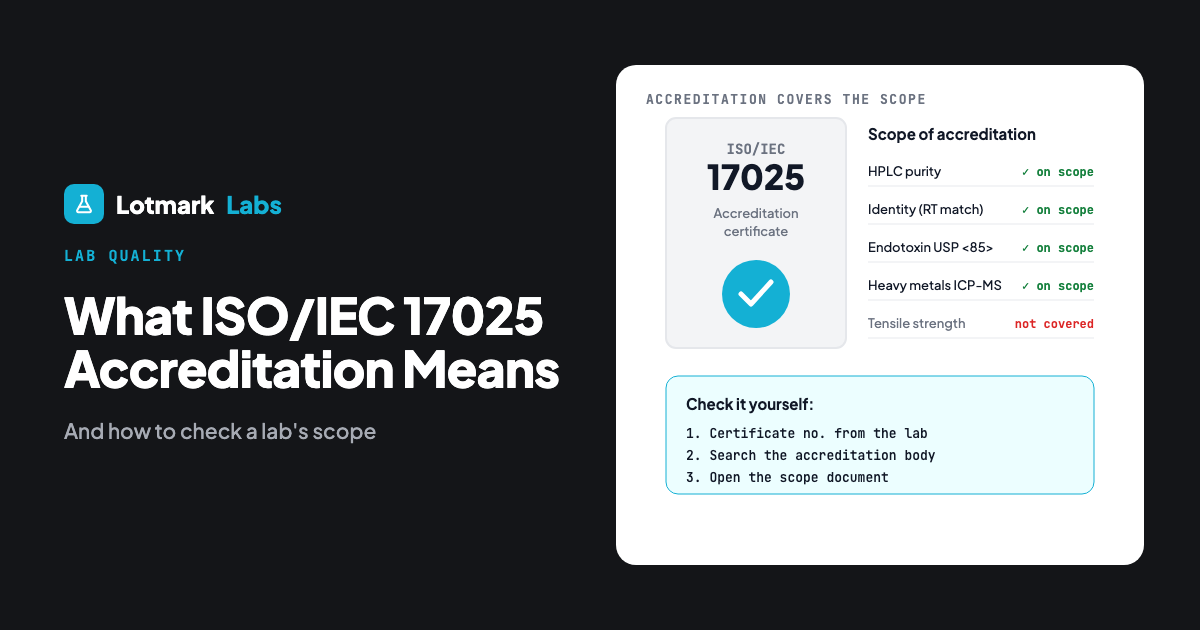
What ISO/IEC 17025 Accreditation Means (and How to Check a Lab's Scope)
What ISO/IEC 17025 accreditation covers, how it differs from ISO 9001 certification, and how to check a lab's certificate and scope with its accreditation body.
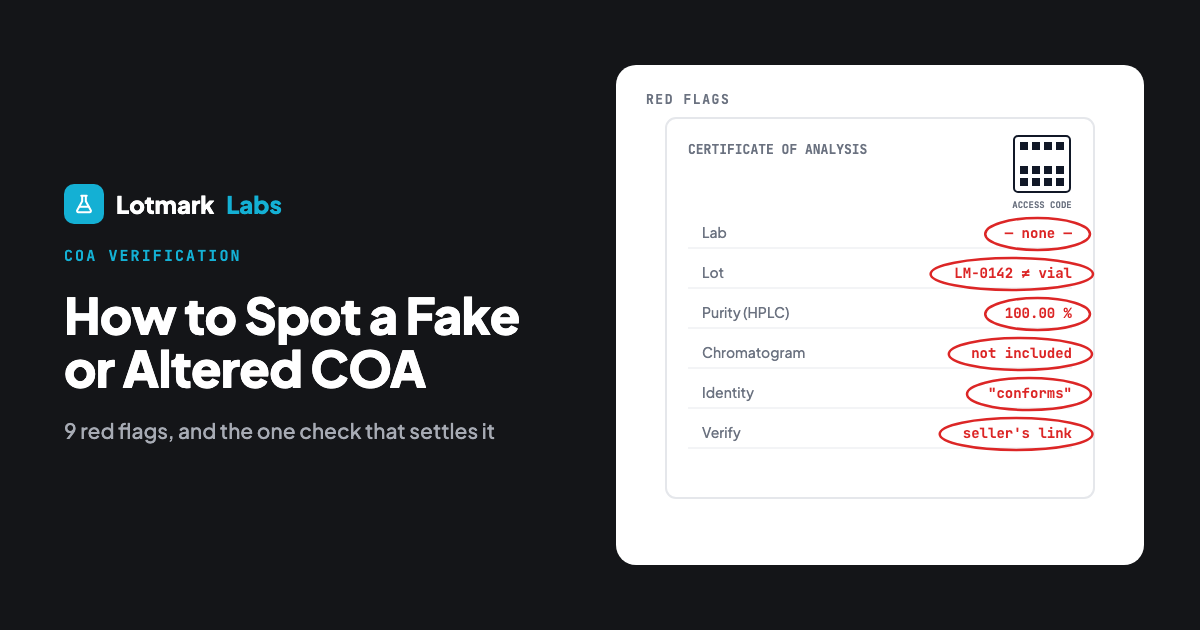
How to Spot a Fake or Altered COA: 9 Red Flags
Nine signs a certificate of analysis has been faked, edited or reused, and how to verify a COA directly with the lab that issued it.
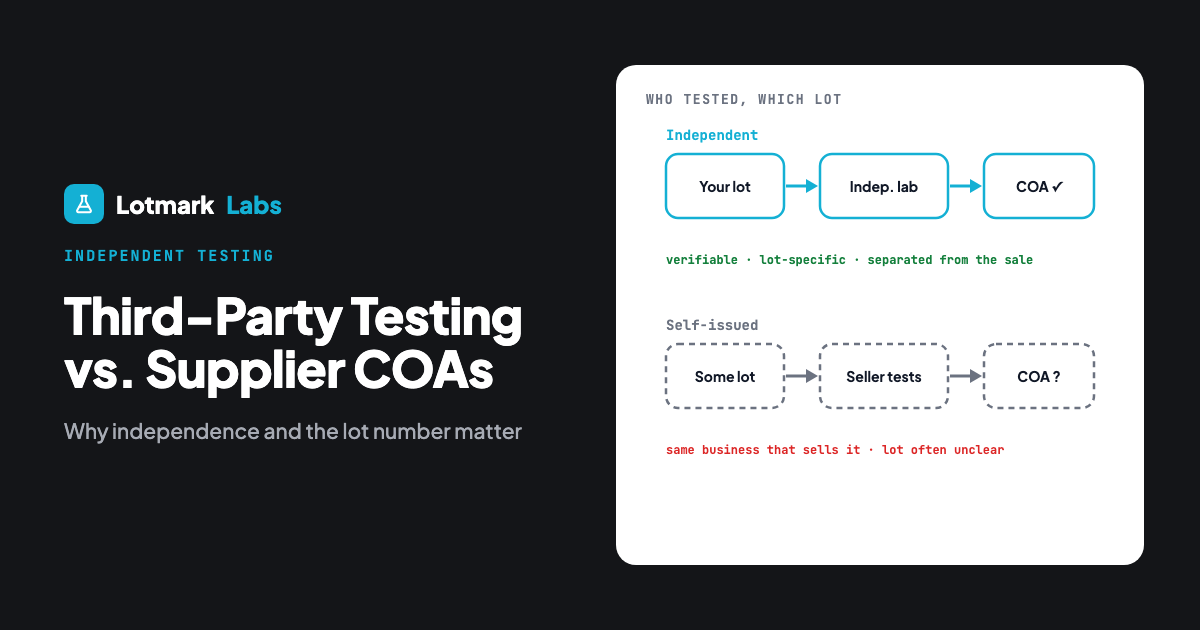
Third-Party Testing vs. Supplier COAs: Why Every Lot Matters
Why independent, lot-specific testing is stronger evidence than a supplier's own COA, what chain of custody means, and how to submit samples for third-party testing.